
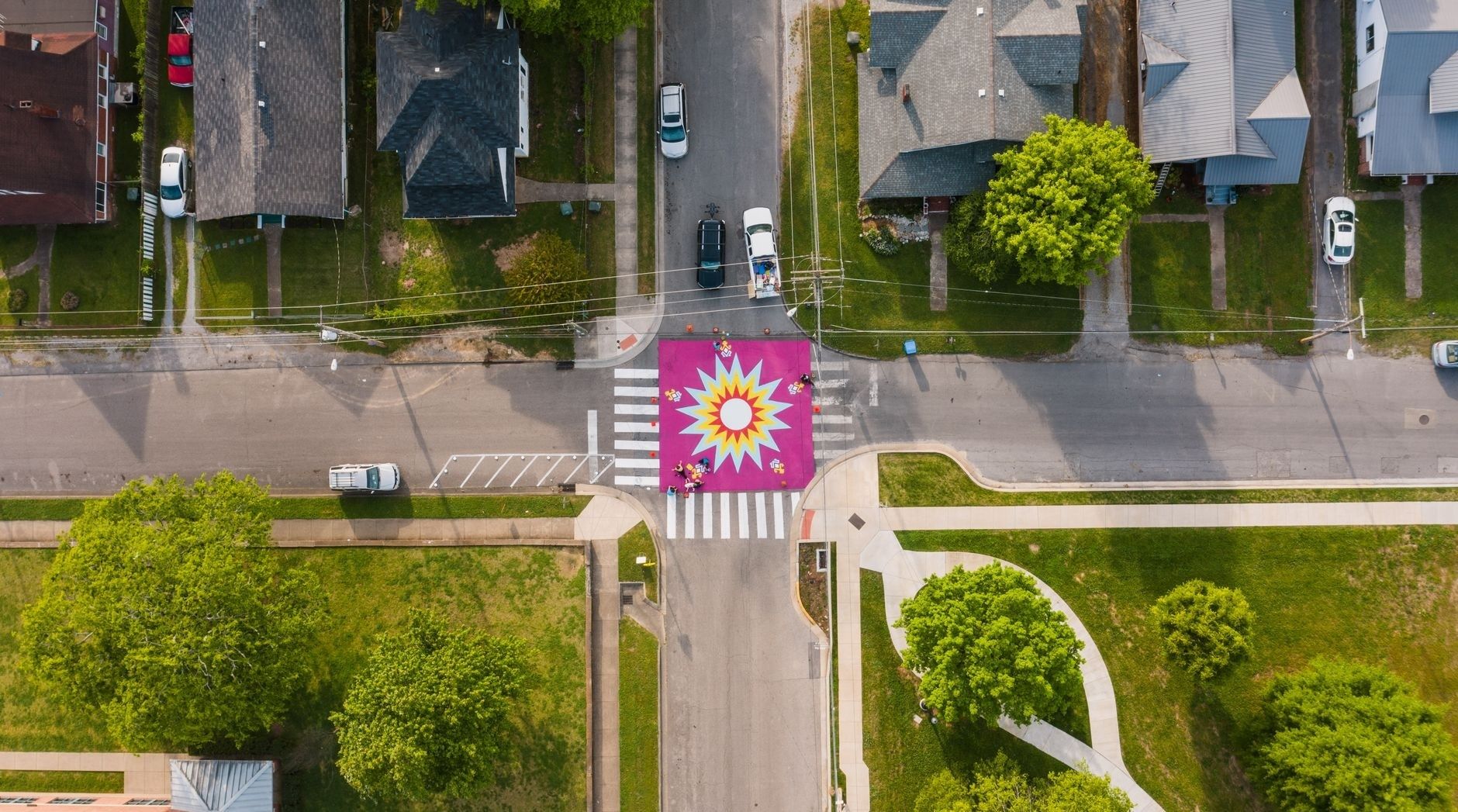
Why Paint on Asphalt Is More Than Public Art
A painted crosswalk or pop-up plaza can look, at first glance, like a modest beautification project. Bright geometric patterns attract attention, temporary planters soften a corner, and a few bollards can make a formerly hostile space feel more welcoming. Yet reducing these interventions to decoration misses their most important function. They are practical, visible experiments that allow a city to test how people and vehicles respond to a different street design before committing substantial public funds.
This approach, often called tactical urbanism or “planning by doing,” turns an ordinary intersection into a real-world laboratory. A temporary curb extension can reveal whether drivers slow down, whether pedestrians cross more directly, and whether buses or emergency vehicles can still move safely. A pop-up plaza can show whether a neglected space supports daily activity when seating, shade, and clear boundaries are added. When these observations are recorded systematically, grassroots energy can become evidence, and evidence can become policy. The path from block to borough often begins with paint, cones, planters, and a community willing to measure what changes.
The Anatomy of Quick-Build Interventions
Tactical urbanism uses inexpensive, rapidly deployable materials to prototype changes to the public realm. Paint marks a new pedestrian zone or visually narrows a vehicle lane. Flexible bollards define a temporary edge. Planters, modular curbs, rubber platforms, and movable seating create physical separation without requiring immediate excavation or permanent concrete construction. The goal is not to bypass engineering standards, but to test a design in actual conditions, gather feedback, identify conflicts, and refine the permanent version.
The cost difference is central to the model. A quick-build project may require several thousand dollars for materials, labor, traffic control, and evaluation, while a conventional reconstruction involving drainage, signals, underground utilities, concrete, and right-of-way changes can cost millions. That disparity does not mean temporary projects are automatically better. Temporary materials weather, require maintenance, and may provide less protection than permanent infrastructure. Their value lies in reducing the financial and political risk of trying a new design. Ann Arbor describes its Vision Zero quick-build projects as a way to test street designs, collect community feedback, evaluate safety tools, and refine final projects before a longer construction process.
Common interventions include several recognizable forms:
- Curb extensions that shorten crossing distances and encourage slower turns by visually and physically narrowing the roadway.
- Daylighted intersections that remove parking or other visual obstructions near a corner so drivers can see pedestrians earlier.
- Mid-block pedestrian islands that give people a protected place to pause while crossing a wide street.
- Pop-up plazas and parklets that convert parking or excess pavement into seating, gathering, shade, or small-scale public space.
- Painted crossings and traffic-calming markings that increase the visual prominence of walking routes and communicate that drivers should expect people in the roadway.
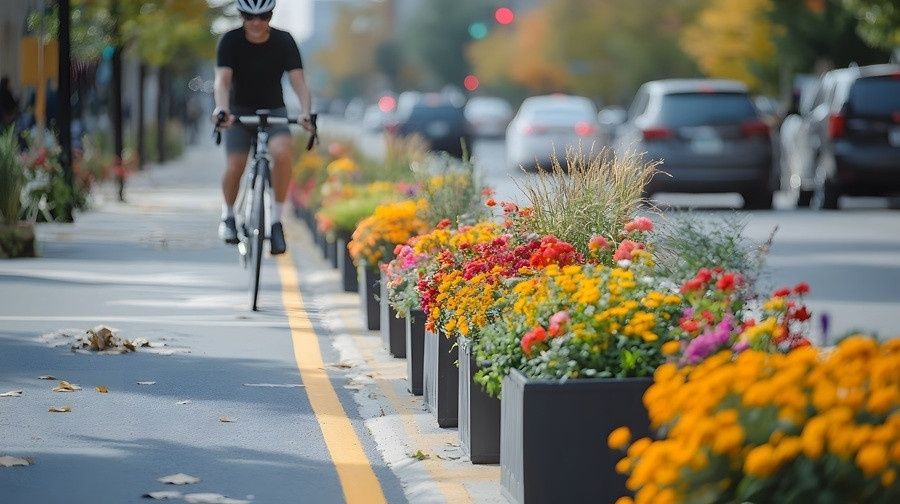
Municipal governments are increasingly creating formal pathways for this work. Nashville”s transportation department, for example, established a dedicated program for community-led temporary transportation projects, with permit requirements and potential funding for selected materials and installation. The city”s NDOT Launches Tactical Urbanism Program demonstrates how an informal community practice can become an organized municipal tool. Formalization matters because it gives residents a legal route to test ideas while giving city staff a consistent way to review accessibility, traffic operations, maintenance, and liability.
Collecting Street-Level Data That City Councils Trust
The strongest tactical urbanism campaigns move beyond statements such as “the intersection feels safer.” Public testimony remains valuable because residents understand conditions that short-term counts may miss, but city councils and transportation departments need comparable measures. A useful evaluation begins before installation and continues after the intervention has operated long enough for users to adapt. The comparison should cover the same days and times where possible, account for weather and special events, and document both intended benefits and unintended problems.
Relevant measures can include vehicle speeds, turning movements, yielding behavior, pedestrian volumes, crossing delay, bicycle activity, transit travel time, and emergency access. Observers can record how often drivers yield to pedestrians with the right of way, how frequently people cross outside designated areas, and whether conflicts occur between turning vehicles and people walking or cycling. Video analysis, radar speed readings, manual counts, surveys, and collision records each reveal different parts of the picture. A well-designed evaluation does not treat a single metric as decisive. Lower speeds may be beneficial even if traffic volume is unchanged, while a modest increase in travel time may be acceptable if the project substantially reduces severe conflicts.
| Evaluation stage | Useful questions | Evidence to collect |
|---|---|---|
| Baseline | What happens before the change? | Speeds, crossing delay, turning volumes, conflicts, collisions, and resident observations |
| Installation period | Are the materials functioning as intended? | Maintenance needs, blocked sightlines, accessibility issues, emergency access, and public feedback |
| Post-installation | Does behavior change after people adjust? | Yielding, driver conflicts, crossing compliance, speeds, walking volumes, and transit operations |
| Longer-term review | Is a permanent design justified? | Collision trends, equity impacts, operating costs, community support, and refined engineering needs |
The Asphalt Art Safety Study offers a particularly useful example of how temporary or visually distinctive street projects can be evaluated. Its historical crash analysis examined 17 sites across five states, while an observational behavior assessment used video-recorded behavior at five locations participating in the Asphalt Art Initiative. The study reported a 50 percent reduction in crashes involving pedestrians or other vulnerable road users, a 37 percent reduction in injury crashes, and a 17 percent reduction in total crashes after installation.
The behavioral findings help explain why those changes may occur. Researchers observed 25 percent fewer pedestrian crossings involving driver conflicts, 27 percent more immediate yielding by drivers to pedestrians with the right of way, and 38 percent fewer pedestrians crossing against the walk signal. These results do not mean that paint alone can solve every dangerous roadway condition. Art cannot substitute for protected infrastructure where speeds are high or traffic exposure is extreme. The evidence does show, however, that a carefully designed visual intervention can influence attention and behavior, particularly when it is integrated with a broader crossing or traffic-calming strategy.
Building Coalitions Across Municipal Departments
Quick-build projects often encounter institutional skepticism before they encounter physical obstacles. Public works staff may worry about maintenance and drainage. Fire officials may focus on turning radii and access. Transit agencies may question whether a curb extension will delay buses. Accessibility specialists must examine detectable edges, clear routes, surface conditions, and the needs of people with visual, mobility, or cognitive disabilities. These concerns are not bureaucratic distractions. They determine whether a temporary project is safe, lawful, and useful enough to inform permanent design.
The most effective coalition-building begins by inviting the relevant departments into the design process rather than presenting a finished installation as a demand. A site plan should identify vehicle paths, pedestrian routes, transit stops, utility covers, fire hydrants, driveways, loading areas, and materials. Fayetteville”s guidance, for example, emphasizes preserving emergency access, maintaining clearances around roadways and hydrants, consulting neighbors, and considering applicable accessibility and traffic-control standards. Testing a project is not permission to disregard those requirements. It is an opportunity to address them early, with materials that can be adjusted if field conditions reveal a problem.
- Public works can review pavement condition, drainage, snow removal, maintenance responsibility, and material durability.
- Fire and emergency services can assess access, turning movements, hydrant clearance, and response reliability.
- Transit authorities can evaluate stop access, boarding conditions, bus maneuvering, and schedule effects.
- Planning and transportation staff can define evaluation methods and connect results to adopted plans.
- Community organizations can coordinate volunteers, communicate with neighbors, and monitor daily performance.
Burlington shows how this cooperation can be institutionalized. Its Tactical Urbanism and Demonstration Projects framework emerged from collaboration among the Department of Public Works, Fire Department, Police Department, residents, and community advocates. The policy treats demonstrations as opportunities to test ideas, collect data, accelerate potential projects, and strengthen partnerships. A formal permit system also protects residents who want to act constructively. Instead of forcing community groups to choose between unauthorized installation and inaction, the city can provide a transparent application process, technical guidance, review timelines, and clear responsibilities.
From Block to Borough Turning Temporary Pilots Into Capital Budget Lines
A temporary project becomes influential when its evaluation is connected to the documents and funding systems that govern permanent construction. City leaders should not be asked simply to “make it permanent.” They should receive a concise case showing the original safety problem, the intervention, the observed results, community input, design adjustments, estimated capital cost, maintenance implications, and equity considerations. That package allows staff to place the project within an existing transportation program rather than treating it as an isolated request.
Local roadway safety plans and Vision Zero initiatives provide especially important bridges. Richmond”s Travel Safe Richmond effort combines a Local Roadway Safety Plan with a Bicycle and Pedestrian Action Plan. The roadway plan identifies safety trends and establishes a framework for funding and implementation, while the pedestrian and bicycle plan consolidates recommendations and proposes near-term infrastructure strategies. A successful pilot can therefore serve as site-specific evidence for a broader safety objective, such as reducing fatal and serious-injury collisions, improving walking conditions, or directing investment to neighborhoods that have historically received less infrastructure funding.
- Define the problem and baseline. Document collision history, speeds, crossing conditions, accessibility barriers, transit operations, and resident concerns before installation.
- Design a safe and reviewable pilot. Prepare a site plan, materials list, maintenance plan, traffic-control strategy, and emergency-access check. Obtain the required permits before placing materials in the street.
- Install and observe consistently. Establish who will conduct counts, how conflicts will be recorded, and when data will be collected. Include feedback from people who walk, roll, cycle, drive, use transit, and operate local businesses.
- Publish the findings. Present clear before-and-after comparisons, limitations, photographs, maintenance records, and recommended design changes. Transparency builds credibility even when the data are mixed.
- Attach the project to an adopted plan. Seek inclusion in a Vision Zero program, roadway safety plan, bicycle and pedestrian plan, transit access program, or Capital Improvement Plan.
- Protect long-term stewardship. Assign responsibility for maintenance, establish performance measures, and create a community contact structure that can report problems without making volunteers responsible for municipal duties.
Equity must remain central throughout this process. Pilot programs can unintentionally favor neighborhoods with professional grant writers, spare volunteer time, or strong relationships with city hall. Municipal funding should therefore include outreach, technical assistance, translation, accessible engagement, and proactive project selection in areas with documented safety risks. A colorful installation in a well-resourced district should not become the only kind of project that receives follow-up. The same measurement framework should be available to residents in overlooked neighborhoods, where a modest intervention may address a much more urgent daily hazard.
Permanent construction also requires honest accounting. Concrete curb extensions, raised crossings, signals, lighting, drainage, protected bicycle facilities, and accessible transit platforms have different costs and maintenance demands. A pilot can reveal that a proposed treatment needs a larger footprint, a different turning geometry, or stronger separation than originally assumed. That is not failure. It is precisely the value of testing before committing capital. Small shifts produce city-scale results when temporary experiments improve the quality of permanent decisions.
Transform Your Street Corner into Citywide Policy
A painted intersection or pop-up plaza is most powerful when treated as the beginning of a disciplined public process. Start with one clearly defined safety concern, such as excessive turning speed, a long crossing distance, blocked sightlines, or a missing connection between a transit stop and nearby homes. Build a simple baseline, consult the people who use the street every day, and ask city staff what permits, standards, and data formats will make the proposal reviewable. Design for accessibility and emergency access from the first sketch, not as an afterthought.
Then measure what changes. Record speeds, yields, delays, conflicts, maintenance needs, and public responses. Share the results in a format that residents can understand and transportation professionals can use. Temporary materials are not merely stopgap solutions when they generate reliable evidence, strengthen cross-department cooperation, and create a credible case for capital investment. The route from paint to policy is built through persistence: a visible experiment, careful measurement, an inclusive coalition, and a clear request for the next permanent step.